
Natural Birth Control: An Introduction
By Sophie Knapp I B.S. M.S.
Reviewed by Emily Reeves I PhD. CNS.
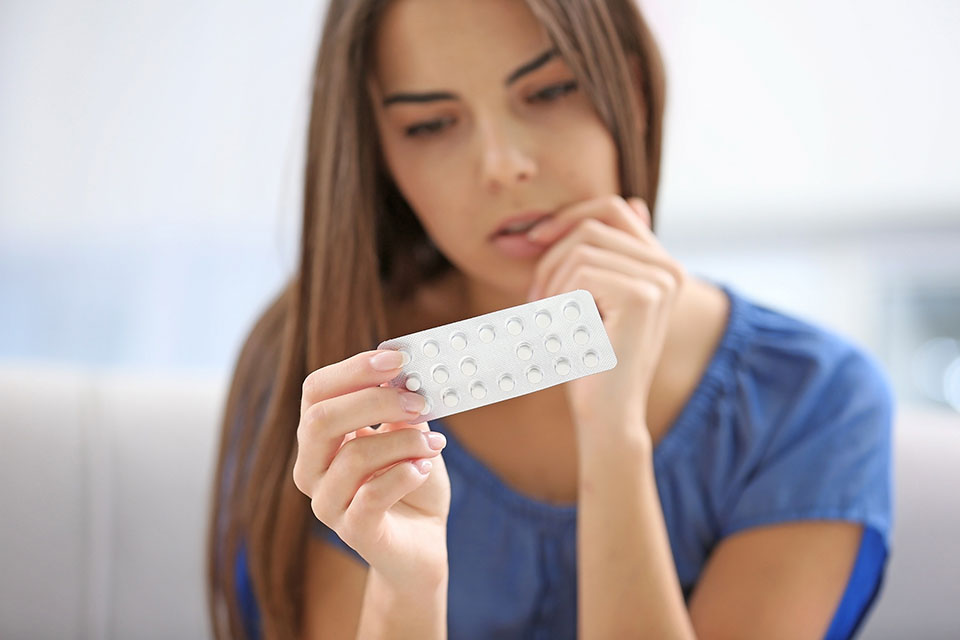
These hormone therapies are effective at preventing pregnancy, but the ease of that prevention comes at a cost.
In addition, a double-blind, placebo-controlled clinical trial involving 332 women ages 18-35 from 2017 tested the differences in overall wellbeing of the women taking hormonal contraceptives vs those taking a placebo. The women who took hormones experienced a statistically significant decrease in their overall well-being scores.4 These scores were broken down into categories. Interestingly, women on hormones experienced significant decreases in their sense of self-control, positive well-being, and overall vitality.4
None of these symptoms are fun. Who wants to take something that can cause discomfort, anxiety and might lead to serious, life-altering problems? At the same time, planning and/or preventing pregnancy is really important for all women, so how can we do it more safely?
Enter natural birth control.
Natural birth control helps you identify that fertile window and add in some buffer, which means for the remainder of your cycle you can experience skin-to-skin intimacy with a very low risk of pregnancy.* For your fertile days there are a variety of contraception methods that work well without the use of synthetic hormones.
In the next post we provide details for how to do natural birth control so that you and your partner can feel confident about preventing/planning pregnancy without the side effects of hormonal birth control. Stay tuned. You will also want to read our example below of how Jill uses natural birth control to prevent pregnancy.

Jill's Natural Birth Control Routine
Jill has a regular cycle and has chosen natural birth control to prevent pregnancy. Jill tracks her menstrual cycle in the Flo app to identify when she might be fertile. Anytime she might be fertile she inserts a diaphragm as a protective barrier during intercourse and has her partner pull-out before ejaculation. Today is 11 days after the 1st day of Jill’s last period. That means today is Day 11 of her cycle. The first thing Jill does before getting out of bed in the morning is grab a thermometer from her bedside table and take her basal body temperature. It’s been a week since her period, so she knows that her body is preparing for ovulation and she must be very diligent with her natural birth control routine. She enters her temperature in the Flo app. Next, she goes about her morning, drinks some coffee, and heads to the bathroom for her morning bowel movement. As she wipes she notices a slippery sensation on the toilet paper. She looks closer to see if it is shiny and uses her fingers to confirm that it is clear and stretchy—like egg whites. Cervical fluid like this indicates estrogen is rising, which means ovulation is coming. Since cervical fluid helps sperm survive, from this moment on until her basal temperature has been elevated for 60 hours, she would use a diaphragm and have her partner pull-out before ejaculation. She makes a quick note of her cervical fluid in the cycle tracking app along with her mood. This process takes her less than five minutes. Suppose one morning, on Day 22 of her cycle, after her basal temperature has shifted for 60 hours, Jill is snuggling with her partner, and he indicates interest in intercourse. In order to prevent pregnancy, Jill needs to confirm where she is in her menstrual cycle, so she communicates to her partner that she needs to check her app to see if they need to use protection. Within a minute she is able to see that she is at a point in her cycle that she is not fertile. Her and her partner can have sex without needing to take any more preventative measures. However, if this had happened, for example on the day of ovulation, then she would take a moment to go back to the bathroom, load her diaphragm with spermicide, and properly insert it. Since diaphragms aren’t 100% effective, her and her partner have agreed that they feel most comfortable if he does his best to pull out at the time of ejaculation to add another layer of protection.
*Please note that natural birth control does not provide protection against sexually transmitted diseases. Please visit the CDC webpage or planned parenthood for recommendations on preventing sexually transmitted infections.
References:
- Contraception. https://www.cdc.gov/reproductivehealth/contraception/index.htm. Published August 13, 2020. Accessed March 16, 2021.
- WebMD – Better information. Better health. https://www.webmd.com/sex/birth-control/birth-control-pills. Updated December 2020. Accessed April 6, 2021.
- Center for Drug Evaluation. Research. Information about the risk of blood clots in women taking drospirenone. Published 2019. Accessed April 20, 2021.
- Zethraeus N, Dreber A, Ranehill E, et al. A first-choice combined oral contraceptive influences general well-being in healthy women: a double-blind, randomized, placebo-controlled trial. Fertil Steril. 2017;107(5):1238-1245.
- Weschler T. Taking Charge of Your Fertility, 10th Anniversary Edition: The Definitive Guide to Natural Birth Control, Pregnancy Achievement, and Reproductive Health. Harper Collins; 2006.
- Guida M, Tommaselli GA, Palomba S, et al. Efficacy of methods for determining ovulation in a natural family planning program. Fertil Steril. 1999;72(5):900-904.
- Mansour D, Inki P, Gemzell-Danielsson K. Efficacy of contraceptive methods: A review of the literature. Eur J Contracept Reprod Health Care. 2010;15(1):4-16.
- Frank-Herrmann P, Heil J, Gnoth C, et al. The effectiveness of a fertility awareness based method to avoid pregnancy in relation to a couple’s sexual behaviour during the fertile time: a prospective longitudinal study. Human Reproduction. 2007;22(5):1310-1319. doi:10.1093/humrep/dem003
- Centers for Disease Control and Prevention: Effectiveness of family planning methods. http://www.cdc.gov/reproductivehealth/UnintendedPregnancy/PDF/Contraceptive_methods_508.pdf. Accessed April 6, 2021.